
Life of an Athlete: The Mind and Body Remember
Therapist Zoe Miniter gives a personal look into her time as an athlete, the pressures to perform, and the long-lasting mental health impacts rowing has had on her life.
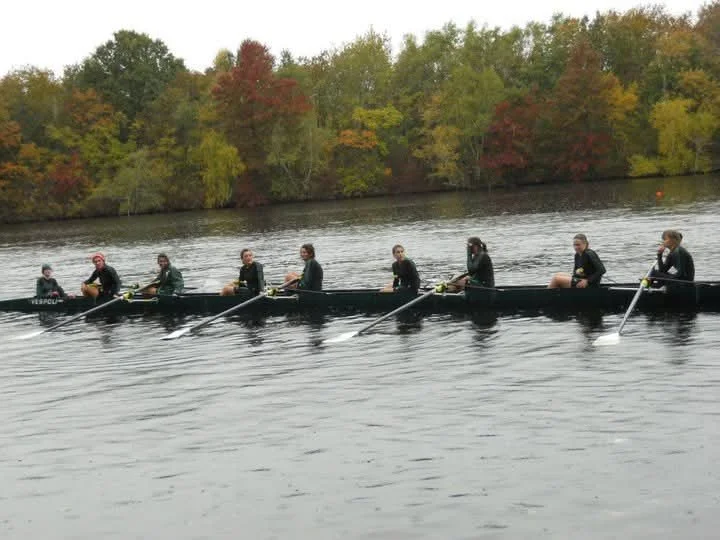
It has been eleven years since I left the water and stepped away from rowing.
An injury took me out of competitive crew, and still when I think about that chapter of my life, something happens inside me: my body tightens, I lose my appetite, I feel hot almost as if I might start sweating. I need to move, to get up from my chair and pace. I can hear the sounds of practice, the pull of the chain on the erg, the shouting of coaches and teammates telling us to keep going. My heart starts pounding, and suddenly I am no longer sitting safely in the present.
I am back there, back at practice, desperate to prove that I am good enough, worthy enough, strong enough to earn my place in the top boat. It is both an excited and happy feeling, but it’s mixed with some grief and difficulties.
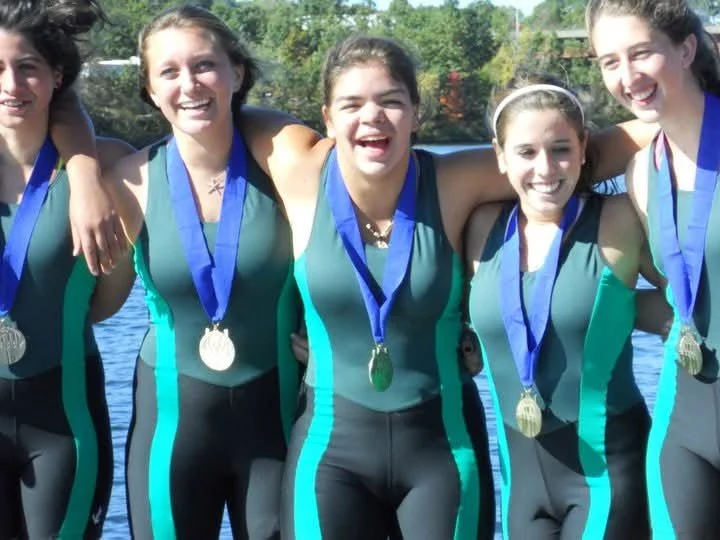
The Pressure and Pain
In rowing, your seat is never truly safe, there is always someone else ready to take your place and you quickly go from competing in a regatta to sitting on the sidelines. I remember erg practices where I was sworn at, pushed past my limits and made to feel that if I could not perform, I was not worth the effort.
I remember being told to push through the pain and wanting to vomit. I remember hearing directly and indirectly that if I slowed down, stopped, or gave up, my seat would be gone.
I remember my legs trembling, my upper body wanting to collapse, and those final strokes feeling like I might pass out. Then it would end, and everything would narrow to one moment, staring at the screen, hoping the numbers were good enough. Sometimes my coach would be standing there with a smile, pleased with the result, and then move on to the next athlete. I would ask my teammates to give me a second; they would help loosen the straps on my shoes so I could get off the erg. I would stand, dizzy and disoriented, and half walk, half run to the bathroom to throw up.
I would come back only to be told practice was over and that boat seats would be decided tomorrow.

The Body Remembers
On the water, it was no different: five miles, ten miles, sometimes twenty. Seat racing, constant adjustments, comparisons and pressure. It is that same feeling of exhaustion, of wanting to collapse, while continuing to row toward the goal that seemed to matter more than anything else. Even now, eleven years later, I can feel how deeply it still lives in me. The anxiety, stress, physical sensations, thoughts and emotions all rush back at once, like being hit by a train.
As for myself, I only made it to college crew, not Division I, not national teams, not the Olympics, and yet still, it left a mark.
I find myself wondering about the athletes who went even further.
Do they still feel it too?
Eleven years later, do their bodies still remember?
Do their minds still go back there?
What must it be like to be the athletes still participating?

When Your Identity is Entirely “The Athlete”
There is another layer that often goes unspoken: the experience of being forced to step away before you are ready.
For some athletes, it is not a choice to leave, it is an injury. It is the body saying no when the mind is still fighting to say yes, to keep going because that is all you have ever known. It is being told you cannot continue, even when everything in you wants to stay, wants to compete and be part of that family.
There is a particular kind of grief in that sense, one that feels like no one would understand, because when you are an athlete, especially in a sport like rowing, it is not just something you do, it becomes who you are.
Your routines, your relationships, your sense of purpose, your identity, all of it is built around that sport.
So, when it is taken away, suddenly and without your consent, you are left asking questions that feel impossible to answer:
Who am I without this?
Where do I belong now?
What do I do with all this drive, this discipline, this need to push?
To compound it all, beyond the loss of identity, there is something quieter but just as disorienting: the loss of structure.
The early mornings
rigid schedule
meal plans based on your activity level
the constant movement toward a goal
built-in expectations of where you need to be and what you need to do.
When that disappears, there can be an unexpected feeling of emptiness, days feel too open and long, too quiet and nothing is structured. Without the routine of training and competition, it can feel like something is missing, not just externally, but internally as well.
The body that once moved with purpose now feels restless and the mind that once focused on performance and goals now searches for direction. It can feel like a compass that is constantly spinning, never landing and pointing due north. It is not just the loss of a sport, it is the loss of the framework that once held everything together, that held you together.
Sometimes, just like the body remembers physical strain, it also remembers the abrupt ending, the disorientation, the emptiness, the silence where something once filled your entire world.

The Nuances of Moving On
In the end, it is the difficult truth: something can be both meaningful and can be painful all at the same time. Rowing was not only a source of pressure for me, it was also my safe place and it became my world. Most of my friends were on the team and we shared a bond that many people will never fully understand.
Crew gave me belonging, it gave me structure, identity, and a sense of purpose. There was something powerful about coming together as a team and pushing toward a common goal. My crew family helped raise me in many ways, the sport taught me how to work with others, how to support my teammates on and off the water, and how it feels to have a place where you truly fit in.
That is what makes experiences like this so complex: sometimes the very thing that shaped you, grounded you, and gave you connection is also the thing that wounded you.
The body remembers what the mind tries to minimize or forget altogether.
It remembers the fear, the pressure, the pain, and the constant need to prove yourself.
It remembers what it took to survive in an environment where performance and worth felt inseparable.
When it ends, whether by choice or by force, there is often a quiet rebuilding that has to happen.
Learning how to exist outside of performance.
Learning how to define yourself beyond a role.
Learning how to listen to your body and rest, instead of pushing past it.
Rebuilding an Identity
From a CBT perspective, this can also be a process of gently noticing the patterns that remain and the thoughts that tell you “I’m only valuable if I’m achieving,” or “ I am nobody without my sport,” the urges to over push or avoid, the beliefs that your worth is tied to performance.
Then slowly overtime, with intentionality, beginning to challenge and reshape those same thoughts:
What would it look like to define worth and self-worth in a different way?
What happens when you allow rest without guilt or shame?
Who are you becoming, not just what are you achieving?
These are not questions that need immediate answers, but they are powerful places to begin.
I am still learning how to do this too, because I believe it is lifelong growth. However, through my own journey with CBT, I have been slowly rebuilding my sense of identity and redefining what it means to be an athlete. Not just someone who performs, produces, and pushes past limits, but someone who listens, adapts, rests, and values their body and mind in a different way.
It is not linear, and it is not easy, but it is possible.
If parts of this resonate with you, if your body still reacts, if your mind still returns, if you are navigating identity loss, the pressure to perform or something else altogether, you are not alone in that experience.
Healing does not mean erasing what happened; it means learning how to carry it differently and being able to honor both the good and the bad.
Every person deserves a space to explore that, to explore who you are beyond the role you’ve carried, to honor the strength it took to keep going, and process the impact in a way that helps you feel seen, heard, and understood.
Zoe Miniter, LMHC and the providers at CBT of Central & South Florida are specialized in sports performance and high performers, treating anxiety, depression, disordered eating, addiction, and supporting clients through life transitions.
